Case Study Examining the Efficacy of Continuous Topical Oxygen Therapy in Managing Chronic Ischemic Wounds Associated with Buerger’s Disease
Last updated:
Poster Author: Joseph Larsen, DPM, DABFAS
Chair of Podiatry, Optum Podiatry
United Health Group
Chronic ischemic wounds associated with Buerger’s disease present significant clinical challenges due to impaired perfusion, persistent hypoxia, and high amputation risk. This case highlights the role of NATROX® O₂ Continuous Topical Oxygen Therapy (cTOT) as an adjunctive treatment in a multidisciplinary wound care setting.
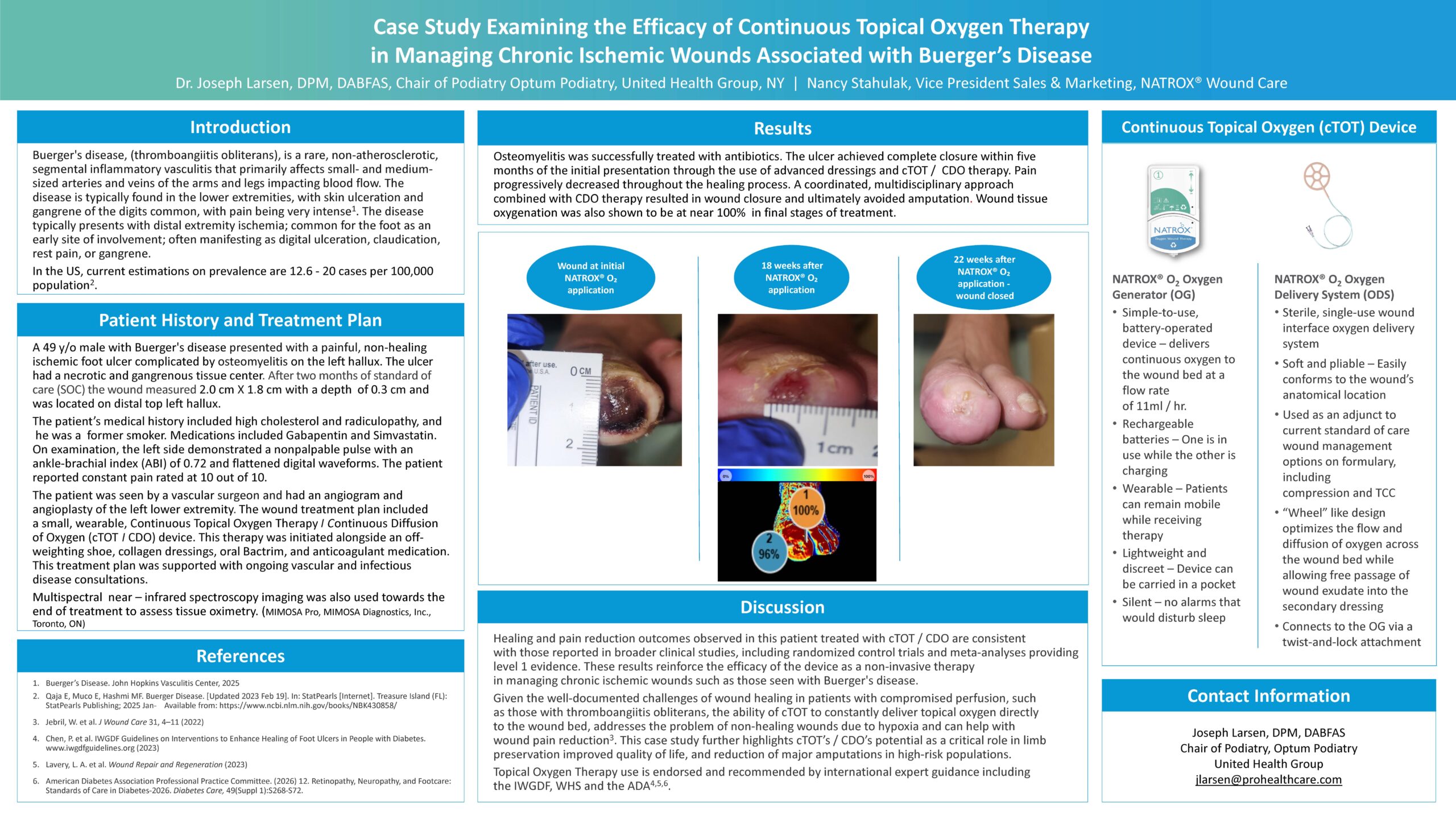
Patient Profile: Ischemic Hallux Ulcer with Osteomyelitis and Peripheral Arterial Disease
A 49-year-old male presented with a painful, non-healing ischemic ulcer of the left hallux complicated by osteomyelitis. Despite two months of standard of care (SOC), the wound failed to progress. Patient history included:
- ABI of 0.72 with nonpalpable pulses
- Necrotic/gangrenous tissue
- Severe pain (10/10)
- History of smoking, high cholesterol, and radiculopathy
Multidisciplinary Wound Care Treatment Plan: Revascularization + cTOT Therapy
A multidisciplinary care plan was implemented, combining:
- Revascularization (angioplasty)
- Antibiotic therapy for osteomyelitis
- Advanced wound dressings and offloading
- Adjunctive Continuous Topical Oxygen Therapy (cTOT) using NATROX® O₂
The NATROX® O₂ system delivers continuous oxygen directly to the wound bed, supporting healing in hypoxic tissue environments while allowing patient mobility.
Clinical Outcomes: Complete Wound Closure, Pain Reduction, and Limb Salvage at 22 Weeks
- Complete wound closure within 22 weeks (~5 months)
- Resolution of osteomyelitis with antibiotic therapy
- Progressive reduction in wound pain
- Near 100% tissue oxygenation at end of treatment as evidenced by Near Infrared Spectroscopy (NIRS)
- Amputation avoided (successful limb preservation)
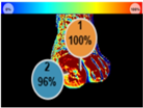
Objective Tissue Oxygenation Measurement Using Near-Infrared Spectroscopy (NIRS)
To further evaluate treatment response, multispectral near-infrared spectroscopy (NIRS) imaging was utilized in the later stages of care to assess tissue oxygenation at the wound site.
Key Finding:
- Near 100% tissue oxygen saturation was observed at the end of treatment
Clinical Relevance:
NIRS provides objective, non-invasive measurement of tissue perfusion and oxygenation, offering clinicians additional insight beyond visual wound assessment. In this case, the imaging data supports the effectiveness of NATROX O₂ in improving local oxygen delivery within a compromised ischemic environment.
Why cTOT Works: Addressing Wound Hypoxia in Ischemic and Vascular Compromised Patients
This case demonstrates that cTOT can:
- Address localized wound hypoxia, a key barrier in ischemic wound healing
- Serve as an effective adjunct to SOC in complex vascular patients
- Support limb salvage strategies in high-risk populations
Outcomes are consistent with Level 1 evidence from randomized controlled trials and meta-analyses supporting topical oxygen therapy.
This poster was presented at SAWC Spring 2026 in Charlotte, North Carolina.